
What is Two-factor Authentication (2FA)
In the present-day digital era, where cyber threats are increasing day by day, securing online accounts has become a necessity, as traditional passwords alone no longer offer sufficient protection. Two-Factor Authentication (2FA) is a potential security measure that adds a layer of security. In this blog, we’ll explore what 2FA is, how it works, and why it’s crucial for both individuals and businesses.
What Is Two-Factor Authentication (2FA)?
Two-Factor Authentication (2FA) is a security process that requires two forms of verification before granting access to an account. Different from the traditional method that depends on a single password (something you know), 2FA requires a second factor, considerably increasing account safety.
The two factors usually come from these categories:
- Something you know – A password, PIN, or security question.
- Something you have – A physical device like a smartphone or authentication token.
- Something you are – Biometric data, like a fingerprint or facial recognition.
By requiring two of these three forms, 2FA makes unauthorized access far more challenging, even if a hacker gets your password.
Why Is 2FA Important?
Passwords alone are not enough to secure sensitive details. With data breaches exposing millions of user credentials, hackers can use automated tools to guess passwords. 2FA offers a critical defense against such attacks. Even if a hacker gets hold of your password, they still need to go through a second factor to access your account.Research from Google shows that 2FA prevents 100% of automated bot attacks, making it one of the most efficient methods for securing online accounts. In a world filled with cyber threats, adopting 2FA is no longer optional; it’s a necessity.
How Does 2FA Work?
Using 2FA is simple. Here’s the usual process:
- Log in – You enter your username and password as usual.
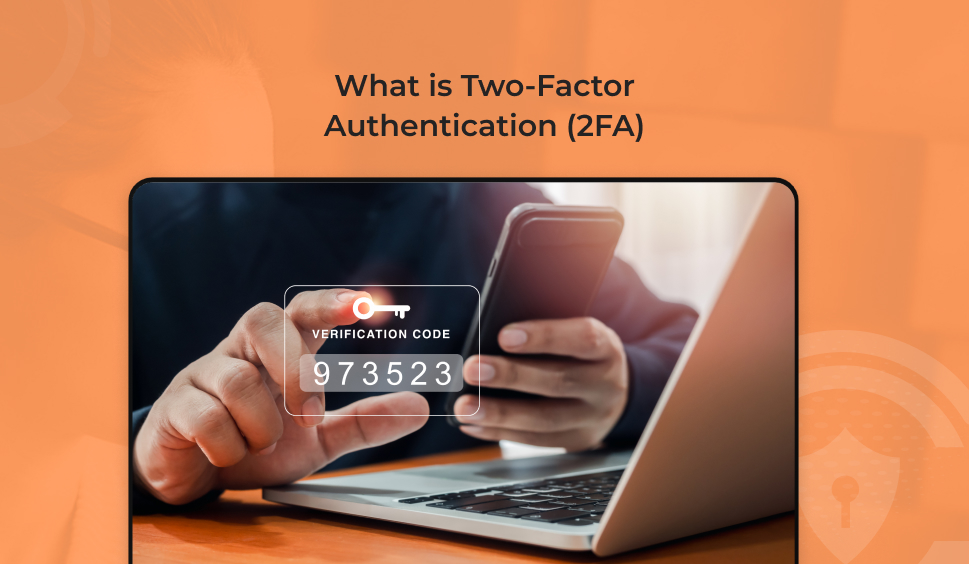
- Second authentication – After entering your password, you’ll be asked to provide a second factor. It could be:
- A One-Time Password (OTP) sent via SMS or email.
- A push notification from your mobile device asking for approval.
- A code from an authenticator app, like Google Authenticator, which changes every 30 seconds.
- Access granted – After entering the second factor, you’re granted access.
Although somewhat more time-demanding, this additional step makes your account notably more secure than depending on passwords alone.
Common Types of 2FA Methods
There are several 2FA methods, each delivering different levels of security. Some of the most common involve:
- SMS-based Authentication – A one-time code is sent via text message after you log in. While thoroughly used, SMS is exposed to risks such as SIM swapping and message interception.
- Authenticator Apps – Apps like Google Authenticator or Authy generate time-sensitive codes, which are safer than SMS as they don’t rely on cellular networks.
- Push Notifications – Services like Duo Security send a push notification to your phone, asking you to approve or deny the login attempt. It is quicker and safer than entering a code manually.
- Hardware Security Keys – Devices such as YubiKey provide the highest level of security. These physical keys authenticate your login and are unlikely to be replicated.
- Biometric Authentication – Methods such as fingerprint scanning or facial recognition. Though newer, it’s acquiring popularity, specifically in mobile devices.
Is SMS 2FA Secure?
While SMS-based 2FA is common, it has vulnerabilities. SMS can be seized, and attackers can exploit weaknesses such as SIM swapping to gain control of your phone number. While still better than no 2FA, SMS is less secure compared to authenticator apps or hardware keys.For advanced security, consider using authenticator apps or security keys. These methods are challenging to intercept and offer better security.
The Benefits of 2FA
- Enhanced Security – 2FA adds an additional layer of protection, making it significantly harder for attackers to compromise your account.
- Protection Against Data Breaches – Even if a password is vulnerable, 2FA makes sure that an attacker can’t access your account without the second factor.
- Effective Against Automated Attacks – 2FA is highly effective in stopping bot-driven attacks, which often rely on brute-forcing passwords.
Conclusion
Two-Factor Authentication (2FA) is a crucial security measure that adds significant security to your online accounts. It lessens the possibilities of unauthorized access, even if your password is compromised. While SMS-based 2FA is common, it’s recommended to use more secure options such as authenticator apps or hardware keys for sensitive accounts.For businesses, implementing 2FA across the organization is crucial to safeguarding company data and employee information. As 2FA becomes more general, the adoption process is becoming effortless. Don’t wait until it’s too late, and make 2FA a standard practice to ensure improved cybersecurity for both individuals and organizations.
How Credentius Enhances 2FA and Simplifies Secure Access, Affordably?
Credentius is an ideal and right companion to your 2FA strategy, delivering a cost-effective, all-in-one password management solution for individuals and businesses. It securely stores and auto-fills strong, unique passwords across all devices, reducing the risk of breaches without the high cost of complex security systems. For teams, Credentius streamlines onboarding, enforces password policies, and offers real-time breach alerts, assisting you in enhancing security and productivity without breaking your IT budget. With Credentius, you get enterprise-grade security at an affordable price.
Start Protecting Your Logins With 2FA Now
Let's Connect

 Let's Discuss Your Tech Solutions